Nutrition and food security in Mali from 2010 to 2020
Copyright © 2020 Authors

This work is licensed under a Creative Commons Attribution 4.0 International License.
- Attribution — You must give appropriate credit, provide a link to the license, and indicate if changes were made.
- No additional restrictions — You may not apply legal terms or technological measures that legally restrict others from doing anything the license permits.





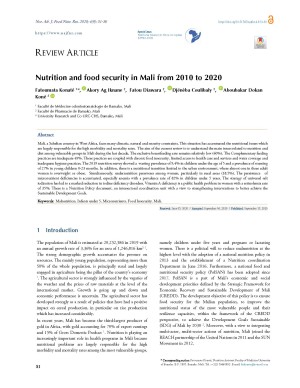
Mali, a Sahelian country in West Africa, faces many climatic, natural and security constraints. This situation has accentuated the nutritional issues which are largely responsible for the high morbidity and mortality rates. The aim of the current review is to understand the main issues related to nutrition and diet among vulnerable groups in Mali during the last decade. The exclusive breastfeeding rate remains relatively low (40%). The Complementary feeding practices are inadequate 49%. These practices are coupled with chronic food insecurity, limited access to health care and services and water coverage and inadequate hygiene practices. The 2019 nutrition survey showed a wasting prevalence of 9.4% in children under the age of 5 and a prevalence of stunting of 27% in young children 0-23 months. In addition, there is a nutritional transition limited to the urban environment, where almost one in three adult women is overweight or obese. Simultaneously, undernutrition perseveres among women, particularly in rural areas (18.5%). The persistence of micronutrient deficiencies is accentuated, especially anemia with a prevalence rate of 82% in children under 5 years. The strategy of universal salt iodization has led to a marked reduction in iodine deficiency disorders. Vitamin A deficiency is a public health problem in women with a retinolemia rate of 35%. There is a Nutrition Policy document, an intersectoral coordination unit with a view to strengthening interventions to better achieve the Sustainable Development Goals.
Keywords
How to Cite
Similar Articles
- Relationship between dietary habits and cardiovascular disease risk factors among commercial drivers in northeast Nigeria
- Effect of peanut-skin fortification on oil separation and consumer acceptance of sesame butter
- Determination of the mineral profile of raw and roasted lentil flour after addition to yogurt
- Evaluation of Hematopoietic and Immune Toxicity in First-Generation (G1) Rats Following Maternal Thiacloprid Exposure During Gestation and Lactation, and the Protective Potential of Bitter Apricot Kernel Extract
- Prognostic performance of serum protein markers in assessing mortality risk for North African pediatric population hospitalized with com-plicated severe acute malnutrition
- Nutritional status of school-age children and adolescents in eastern and southern Africa: A scoping review
- Impact of incorporating sesame oil (Sesamum indicum L.) in an Algerian frying oil and margarine formulation
- Antioxidant activity and polyphenol composition of Pistacia terebinthus fruit from Tessala (Western Algeria)
- Regional and socio-demographic predictors of dietary proficiency of adolescent girls in Nigeria
- Micronutrient supplementation among pregnant women in western Algeria
You may also start an advanced similarity search for this article.

 NAJFNR is licensed under