
Share your research with the world. Submit your manuscript for peer review.
Make a SubmissionComplaints Policy
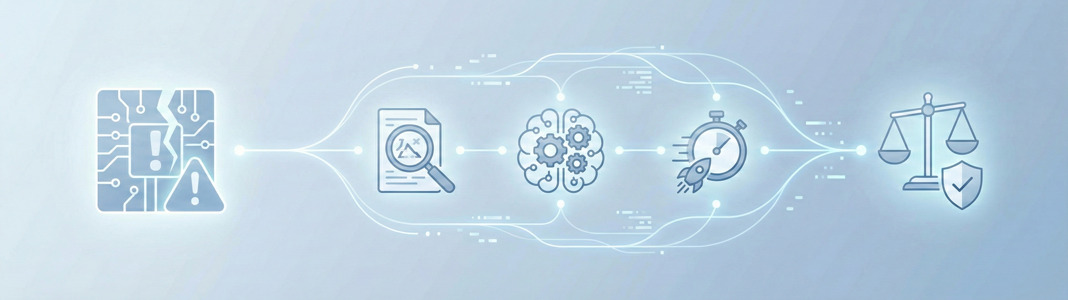
NAJFNR is deeply committed to upholding the highest standards of publication ethics and journalistic integrity. We strive to publish articles of the utmost quality, free from errors, inaccuracies, and ethical breaches. We recognize that, despite our rigorous processes, concerns or complaints may occasionally arise. Our policy is designed to address all such concerns systematically, fairly, and transparently, in full alignment with the recommendations of the Committee on Publication Ethics (COPE).
This statement outlines the policies, procedures, and actions regarding complaints received by NAJFNR. We welcome complaints and strive to resolve issues to the satisfaction of our authors and readers. We aim to address any queries or complaints promptly. However, we encourage our authors and readers to carefully read and understand the instructions for authors and the journal's policies.
Our Understanding of Complaints
- We define a complaint as any expression of unhappiness or dissatisfaction regarding the publication process or policies of the journal;
- A complaint may concern long delays in publication or responses to the author;
- A complaint may regard a decision by an editorial board member or the Editor-in-Chief regarding a manuscript;
- A complaint may also concern perceived rude responses or misjudgment by an editorial board member.
Scope of Complaints
This policy covers a range of concerns related to published or submitted manuscripts, including but not limited to:
- Allegations of scientific misconduct (e.g., plagiarism, data fabrication or falsification, redundant publication).
- Infringements of intellectual property rights (e.g., copyright violation).
- Significant factual inaccuracies or misleading content.
- Unethical research practices or concerns related to research integrity.
- Editorial or peer review process concerns.
Complaint Resolution Process:
- Wherever possible, complaints will be dealt with by the relevant member of the editorial staff, escalating to the Co-Editor if required.
- In the case that this initial response is insufficient, the complainant can request for the complaint to be escalated to Associate Section Editors.
- If the complainant remains unhappy, complaints should be escalated to the Editors-in-Chief, whose decision is final.
NAJFNR is prepared to address the following types of complaints:
- Complaints from authors;
- Complaints about plagiarism;
- Duplicate publication or simultaneous submission;
- Research results misappropriation;
- Complaints regarding research errors and fraud;
- Violations of research standards;
- Conflicts of interest;
- Biased behavior of reviewers.
Policy for Handling Complaints
A. Receiving and Investigating Complaints
All complaints should be submitted in writing to the journal's editorial office, providing clear details of the concern and any supporting evidence.
Upon receiving a complaint, particularly concerning issues such as infringement of intellectual property rights, factual inaccuracies, unlawful material, or suspected ethical misconduct, NAJFNR will initiate a prompt and thorough investigation. Our dedicated editorial staff and editors are committed to minimizing errors and upholding the quality of the journal.
Upon receipt of a complaint, NAJFNR is committed to:
- Prompt Acknowledgment: An initial acknowledgment of receipt will be sent to the complainant, typically within 2-3 business days, confirming that their concern has been received and outlining the subsequent steps.
- Confidentiality: All complaints will be handled with strict confidentiality.
B. Investigation Process
All complaints related to publication ethics or research integrity will undergo a thorough and objective investigation, guided by COPE's core practices and relevant flowcharts. The investigation process is comprehensive and may involve several stages:
- Initial Assessment: The Editor-in-Chief and relevant editorial board members will conduct an initial assessment to determine the nature and seriousness of the complaint.
- Information Gathering: This may include requesting further information or substantiation of claims from the complainant, authors, reviewers, or any other involved parties.
- Expert Consultation: For complex scientific or ethical issues, the journal may consult with external experts or its designated Fact-Finding Committee (FFC).
- Institutional Referral: Consistent with COPE recommendations, NAJFNR does not act as an adjudicator in authorship disputes or complex allegations of research misconduct. In such cases, or where the journal lacks the necessary authority or investigative capacity, the matter will be formally referred to the authors' affiliated institution(s) for internal investigation and resolution. The journal will await the institution's findings and recommendations.
- Documentation: All stages of the investigation, including communications and decisions, will be meticulously documented.
C. Timeframes for Investigation and Resolution
Given the varying complexity of complaints, a precise universal timeline for resolution cannot be guaranteed. However, NAJFNR is committed to providing a timely and efficient process:
- Acknowledgment: Within 2-3 business days.
- Initial Investigation & Communication: For straightforward matters, an initial assessment and communication of the next steps or preliminary findings may occur within 2-4 weeks.
- Complex Investigations: For complex cases requiring detailed investigation, multiple rounds of communication, or institutional involvement, the process can realistically take several weeks to several months. The journal will endeavor to provide periodic updates to the complainant on the progress of the investigation.
Complaint Resolution and Communication
Upon conclusion of the investigation, NAJFNR will:
- Communicate the Outcome: The outcome of the investigation will be communicated to all relevant parties.
- Implement Corrective Actions: Depending on the findings, corrective actions may be implemented, including but not limited to:
- Publication of a Correction (for minor errors).
- Publication of an Expression of Concern (when an investigation is ongoing or inconclusive).
- Retraction (for confirmed scientific misconduct, as per our policy on Ethical Standards and Action for Plagiarism).
- Issuance of editorial notices or comments.
- Maintain Integrity: The paramount goal throughout the complaint handling process is to maintain the integrity of the published scholarly record and ensure fairness to all involved parties.
How to Make a Complaint?
Complaints from authors and readers should be sent promptly to the Editor-in-Chief at contact@najfnr.com.
You are also welcome to discuss your complaint by contacting the Editor-in-Chief directly at (+213) 551152261.
The procedure aims to be fair to those making complaints and those complained about. All complaints will be acknowledged (within three working days if by email). If possible, a definitive response will be made within two weeks. If this is not possible, an interim response will be given within two weeks. Interim responses will be provided until the complaint is finally resolved.
Conflicts of Interest Disclosure
The NAJFNR is committed to upholding the highest standards of publication ethics and takes publication malpractice and conflicts of interest seriously. All authors and members of NAJFNR’s Editorial Boards are required to disclose any actual and potential conflicts of interest at submission or upon accepting an editorial or review assignment.
As an author, disclosure of any potential conflict of interest should be done during the submission process. Consider the following questions and ensure you disclose any affirmative answers:
- Did you or your institution at any time receive payment or services from a third party for any aspect of the submitted work?
- Do you have financial relationships with entities that could be perceived to influence, or that give the appearance of potentially influencing, what you wrote in the submitted work?
- Do you have any patents and copyrights, whether pending, issued, licensed and/or receiving royalties related to the research?
- Do you have other relationships or activities that readers could perceive to have influenced, or that give the appearance of potentially influencing, what you wrote in the submitted work?
How to Appeal an Editorial Decision
If you desire to appeal a journal editor’s decision, please submit an appeal letter to the journal’s online editorial office (contact@najfnr.com). Please address this to the editor and explain clearly the basis for an appeal.
You should:
- Provide details why you disagree with the decision. Please provide specific responses to any of the editor’s and/or reviewers’ comments that contributed to the reject decision.
- Provide any new information or data that you would like the journal to take into consideration.
- Provide evidence if you believe a reviewer has made technical errors in the assessment of your manuscript.
- Include evidence if you believe a reviewer may have a conflict of interest.
After receiving the appeal, editors may involve any associate/section editor who handled the peer review of the original submission, depending on the nature of the appeal. Editors may confirm their decision to reject the manuscript, invite a revised manuscript, or seek additional peer or statistical review of the original manuscript.
Formal Appeal Process
Authors have the right to submit a formal appeal to the journal's editorial office for reconsideration of a final decision. To be considered, appeals must adhere to the following protocol:
A. Submission and Deadline
- Deadline: The appeal must be submitted within 14 calendar days of the date of the editorial decision.
- Format: Authors must submit a formal letter of appeal addressed to the Editor-in-Chief. This letter should be concise, professional, and clearly articulate the reasons for the disagreement. It must specifically address factual errors, misinterpretations, or significant misunderstandings in the original review. The appeal should not simply re-state the authors' arguments but must provide substantiated evidence for their claims.
B. Review and Re-evaluation
- Initial Review: Upon receipt, the appeal letter will be reviewed by the Editor-in-Chief. The Editor-in-Chief will assess the validity of the claims and determine if the appeal warrants a re-evaluation of the manuscript.
- Independent Adjudication: If the appeal is deemed valid, it will be assigned to an Associate Editor or an impartial member of the Editorial Board who was not involved in the initial decision. This individual will review the authors' appeal, the previous reviews, and the manuscript to ensure a fair and objective reconsideration.
- Re-review (if necessary): In some cases, the Editor-in-Chief may decide to send the manuscript for an additional peer review by a new, independent expert.
C. Final Decision
- The decision on the appeal is final.
- The Editor-in-Chief's decision, based on the re-evaluation, will be communicated to the authors within 30 days of the appeal's submission.
- No further correspondence regarding the decision will be entertained.


 NAJFNR is licensed under