Food and Water Security in Developing Economies: Impact of Pandemic and Possible Interventions
Copyright © 2020 Authors

This work is licensed under a Creative Commons Attribution 4.0 International License.
- Attribution — You must give appropriate credit, provide a link to the license, and indicate if changes were made.
- No additional restrictions — You may not apply legal terms or technological measures that legally restrict others from doing anything the license permits.





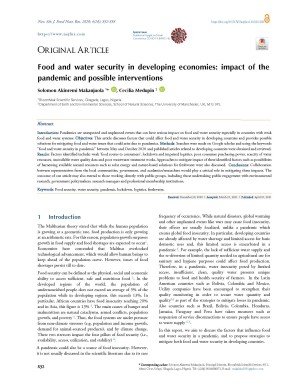
Background: Pandemics are unexpected and unplanned events that can have serious impact on food and water security especially in countries with weak food and water systems. Aims: This article discusses factors that could affect food and water security in developing countries and provides and provides possible solutions for mitigating food and water issues that could arise due to pandemics. Methods: Searches were made on google scholar on ‘food and water security in pandemic’ between May and October 2020 and published articles related developing countries were obtained and reviewed. Results: Factors identified include: weak ‘food routes to consumers’, lockdown and impaired logistics, poor consumer purchasing power, scarcity of water resource, unavailable water quality data and poor wastewater treatment works. Approaches to mitigate impact of these identified factors such as possibilities of harnessing available natural resources like solar energy and nature-based solutions for freshwater to help mitigate some of these identified impacts were also discussed. Conclusions: Collaboration between representatives from the local communities, government, and academics/researchers would also play a critical role in mitigating these impacts. The outcome of our article may also extend to those working directly with public groups, including those undertaking public engagement with environmental research, government policymakers, research managers and professional membership institutions.
Keywords
How to Cite
Similar Articles
- Association between meal skipping and the double burden of malnutrition among university students
- Immune-stimulating and antioxidant properties of a traditional Algerian plant combination: Date fruit (Phoenix dactylifera) and Fenugreek seeds (Trigonella foenum-graecum)
- Antibacterial and antihemolytic assessment of Allium sativum through optimized protein fraction extraction
- Assessment of energy and nutrient intake adequacy and dietary diversity of pregnant women in Abidjan
- Effect of incorporating Lippia javanica (Zumbani) on physical, nutritional, microbiological, and sensory properties of instant soup mix powder
- Determination of phthalate esters contents in different types of cheese produced and consumed in Saudi Arabia
- Beneficial effects of a fermented maize product with its supernatant, Lactobacillus fermentum and Lactobacillus brevis in rat model of colitis
- Nutritional properties and plausible benefits of Pearl millet (Pennisetum glaucum) on bone metabolism and osteoimmunology : a mini-review
- Determination of sensory, microbiological and antioxidant properties of tortilla added with roselle decoction calyxes powder
- Seed from olive cake prevents hyperglycemia, hyperlipidemia, and oxidative stress in dexamethasone-induced diabetes rats
You may also start an advanced similarity search for this article.

 NAJFNR is licensed under