Physicochemical quality assessment of Brazilian frozen beef imported into Algeria
Copyright © 2018 Authors

This work is licensed under a Creative Commons Attribution 4.0 International License.
- Attribution — You must give appropriate credit, provide a link to the license, and indicate if changes were made.
- No additional restrictions — You may not apply legal terms or technological measures that legally restrict others from doing anything the license permits.





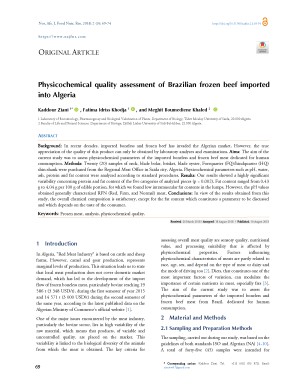
Background and aims: In recent decades, imported boneless and frozen beef has invaded the Algerian market. However, the true appreciation of the quality of this product can only be obtained by laboratory analyzes and examinations. The aim of the current study was to assess physicochemical parameters of the imported boneless and frozen beef meat dedicated for human consumption. Methods: Twenty (20) samples of neck, blade bolar, brisket, blade oyster, Forequarter (FQ)/hindquarter (HQ) shin-shank were purchased from the Regional Meat Office in Saida city, Algeria. Physicochemical parameters such as pH, water, ash, protein and fat content were analyzed according to standard procedures. Results: Our results showed a highly significant variability concerning protein and fat content of the five categories of analyzed pieces (p=0.002). Fat content ranged from 0.43g to 4.04g per 100g of edible portion, for which we found low intramuscular fat contents in the lumps. However, the pH values obtained generally characterized RFN (Red, Firm, and Normal) meat. Conclusions: In view of the results obtained from this study, the overall chemical composition is satisfactory, except for the fat content which constitutes a parameter to be discussed and which depends on the taste of the consumer.
Keywords
How to Cite
Similar Articles
- Investigation of total aflatoxin in nuts and dried fruits and consumption habits during pregnancy in Türkiye
- Household production and energy content of infant flours for children aged 6 to 11 months in two rural settings in southern Benin
- An overview on the incorporation of novel ingredients on nutritional, textural, and organoleptic properties of gluten-free cereal products
- Body composition, energy expenditure, and markers of hemolysis in adults with sickle cell disease
- Mold Chitosan production using Ficus microcarpa fruit
- Food and Water Security in Developing Economies: Impact of Pandemic and Possible Interventions
- COVID-19 and vitamin D supplementation: Is there any evidence based to reduce the risk?
- Mediterranean diet and food consumption in an urban adult population of Northwest Algeria
- Zero hunger and malnutrition in the African continent is potentially feasible, if nutrition programs are prioritized politically and scientifically
- Prevalence of type 2 diabetes mellitus in Africa: an updated narrative review
You may also start an advanced similarity search for this article.
Most read articles by the same author(s)
- Epidemiology, diagnosis, and assessment of diabetes mellitus in the elderly population: a purposive review
- The role of nutrition in strengthening immune system against newly emerging viral diseases: case of SARS-CoV-2
- Predatory journals and publishers at a glance: Take apart or take over?
- Overview on main nutrition-related diseases in three countries from North Africa
- Understanding Bread Consumption and Waste Patterns in Algeria and Tunisia: Insights into Consumer Practices and Challenges
- Metabolic syndrome and risk of colorectal adenoma and colorectal cancer: A meta-analysis
- New insight on nutrition and COVID-19 pandemic
- Metabolic syndrome components correlation with colorectal neoplasms: A systematic review and a meta-analysis
- Editorial introduction to the first issue
- Ameliorative Effects of Citrus aurantium Juice on Metabolic Disorders Induced by Trans Fatty Acid-Rich Amalgam in Wistar rats

 NAJFNR is licensed under