Differences in dietary intake between Turkish vegans and omnivores: a cross-sectional study
Copyright © 2023 Buse Sarıkaya, Aslı Yiğit, Şule Aktaç, Fatma Esra Güneş

This work is licensed under a Creative Commons Attribution 4.0 International License.
- Attribution — You must give appropriate credit, provide a link to the license, and indicate if changes were made.
- No additional restrictions — You may not apply legal terms or technological measures that legally restrict others from doing anything the license permits.





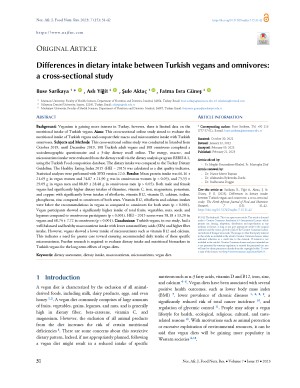
Background: Veganism is gaining more interest in Turkey, however, there is limited data on the nutritional intake of Turkish vegans. Aims: This cross-sectional online study aimed to evaluate the nutritional intake of Turkish vegans and compare their macro and micronutrient intake with Turkish omnivores. Subjects and Methods: This cross-sectional online study was conducted in İstanbul from October 2019, until December 2019. 108 Turkish adult vegans and 108 omnivores completed a sociodemographic questionnaire and a 3-day dietary recall online. The energy, macro-, and micronutrient intake were evaluated from the dietary recall via the dietary analysis program BEBIS 8.1, using the Turkish Food composition database. The dietary intake was compared to the Turkey Dietary Guideline. The Healthy Eating Index 2015 (HEI – 2015) was calculated as a diet quality indicator. Statistical analyses were performed with SPSS version 22.0. Results: Mean protein intake was 66.16 ± 21.69 g in vegan women and 74.87 ± 21.90 g was in omnivorous women (p < 0.05), and 75.53 ± 29.09 g in vegan men and 88.89 ± 28.48 g in omnivorous men (p > 0.05). Both male and female vegans had significantly higher dietary intakes of thiamine, vitamin C, iron, magnesium, potassium, and copper; with significantly lower intakes of riboflavin, vitamin B12, vitamin D, calcium, iodine, phosphorus, zinc compared to omnivores of both sexes. Vitamin B12, riboflavin and calcium intakes were below the recommendations in vegans as compared to omnivores for both sexes (p < 0.001). Vegan participants showed a significantly higher intake of total fruits, vegetables, nuts, seeds, and legumes compared to omnivorous participants (p < 0.001). HEI – 2015 scores were 58.18 ± 13.20 in vegans and 68.74 ± 7.72 in omnivores (p < 0.001). Conclusions: Turkish vegans, in our study, had a well-balanced and healthy macronutrient intake with lower saturated fatty acids (SFA) and higher fiber intake. However, vegans showed a lower intake of micronutrients such as vitamin B12 and calcium. This indicates a need for greater care toward ensuring recommended daily intake of these specific micronutrients. Further research is required to evaluate dietary intake and nutritional biomarkers in Turkish vegans for the long-term effects of vegan diets.
Keywords
How to Cite
Similar Articles
- Nutritional and Bioactive Profile of Gitumon: An Indonesian Traditional Herbal Beverage
- Seed from olive cake prevents hyperglycemia, hyperlipidemia, and oxidative stress in dexamethasone-induced diabetes rats
- Acceptance of salt reduction in bakery bread among Moroccan consumers
- Bioactive compounds and antioxidant potential of soft wheat and oat bran on the Algerian market
- Visualization of nutrient-related clinical practice guidelines in childhood
- Rapid survey on lifestyle changes and body weight gain among Algerians during COVID-19 lockdown
- Nutrition and food security in Mali from 2010 to 2020
- An update of the nutritional situation in eastern Algeria
- Effect of a millet-based fortified complementary food on the anthropometric and biochemical indices of anemic infants (6-24 months) - ARTICLE RETRACTED
- Association between breakfast intake and short-term memory, performance and mood among Saudi female adolescents
You may also start an advanced similarity search for this article.
Most read articles by the same author(s)
- Examination of traditional fermented food consumption and product awareness of university students in Istanbul, Turkey
- Quality of life, perceived stress and nutrition of patients with irritable bowel syndrome: A descriptive study
- Investigation of total aflatoxin in nuts and dried fruits and consumption habits during pregnancy in Türkiye

 NAJFNR is licensed under