Acceptance of salt reduction in bakery bread among Moroccan consumers
Copyright © 2020 Authors

This work is licensed under a Creative Commons Attribution 4.0 International License.
- Attribution — You must give appropriate credit, provide a link to the license, and indicate if changes were made.
- No additional restrictions — You may not apply legal terms or technological measures that legally restrict others from doing anything the license permits.





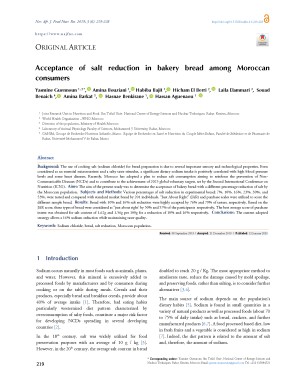
Background: The use of cooking salt (sodium chloride) for bread preparation is due to several essential sensory and technological properties. Even considered as an essential micronutrient and a salty taste stimulus, a significant dietary sodium intake is positively correlated with high blood pressure levels and some heart diseases. Recently, Morocco has adopted a plan to reduce salt consumption aiming to reinforce the prevention of Non-Communicable Diseases (NCDs) and to contribute to the achievement of 2025 global voluntary targets, set by the Second International Conference on Nutrition (ICN2). Aims: The aim of the present study was to determine the acceptance of bakery bread with a different percentage reduction of salt by the Moroccan population. Subjects an Methods: Various percentages of salt reduction in experimental bread; 7%, 10%, 16%, 23%, 30%, and 53%, were tasted and compared with standard market bread by 201 individuals. “Just About Right” (JAR) and purchase scales were used to score the different bread. Results: Bread with 10% and 16% salt reduction were highly accepted by 76% and 79% of tasters, respectively. Based on the JAR score, these types of bread were considered as “just about right’ by 50% and 57% respectively by the participants. The best average score of purchase intent was obtained for salt content of 1.62g and 1.56g per 100g for a reduction of 10% and 16% respectively. Conclusions: The current adopted strategy allows a 16% sodium reduction while maintaining taste quality.
Keywords
How to Cite
Similar Articles
- Effects of extrusion on nutritional and non-nutritional properties in the production of multigrain ready to eat snacks incorporated with NUA45 beans
- Association of obesity with the lower limbs osteoarthritis in a community of women from El Jadida province in Morocco
- The Association Between Perceived Stress, Lifestyle and Dietary Behaviors, and Hypertension Among University Personnel
- Prognostic performance of serum protein markers in assessing mortality risk for North African pediatric population hospitalized with com-plicated severe acute malnutrition
- Update of the nutritional situation in the Republic of the Sudan
- Prevalence of prediabetes in an urban Nigerian population using the Finnish Diabetes Risk Score.
- Neurotoxic and neuromotor effects of cyanate, an oxidative byproduct of cyanide from linamarin in cassava: A systematic review
- Pica in sickle cell disease: nutritional management and implications
- Viability of lactic acid bacteria in different components of ogi with anti diarrhoeagenic E. coli activities
- Sodium metabisulfite dipping, hot water blanching and sulfur fumigation impact on the nutritional quality of dried apricot (Prunus armeniaca L.) cultivars
You may also start an advanced similarity search for this article.
Most read articles by the same author(s)
- Diet, weight status, and physical activity in cancer prevention
- Hypertension in Moroccan adults: sociodemographic, lifestyle, and dietary risk factors
- Association of socioeconomic status, dietary behavior and obesity among Moroccan adults of the region of Rabat: A case-control study
- Calcium status in Moroccan children and adolescents assessed by 24-hour urinary excretion
- Nutritional Status, Muscle Mass, and Body Fat Percentage in Patients with Breast Cancer Undergoing Adjuvant Chemotherapy

 NAJFNR is licensed under