Sports supplements: use, knowledge, and risks for Algerian athletes
Copyright © 2020 Authors

This work is licensed under a Creative Commons Attribution 4.0 International License.
- Attribution — You must give appropriate credit, provide a link to the license, and indicate if changes were made.
- No additional restrictions — You may not apply legal terms or technological measures that legally restrict others from doing anything the license permits.





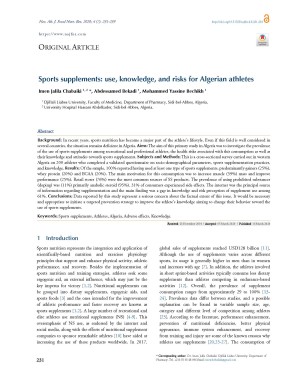
Background: In recent years, sports nutrition has become a major part of the athlete’s lifestyle. Even if this field is well considered in several countries, the situation remains deficient in Algeria. Aims: The aim of this primary study in Algeria was to investigate the prevalence of the use of sports supplements among recreational and professional athletes, the health risks associated with this consumption as well as their knowledge and attitudes towards sports supplements. Subjects and Methods: This is a cross-sectional survey carried out in western Algeria on 200 athletes who completed a validated questionnaire on socio-demographical parameters, sports supplementation practices, and knowledge. Results: Of the sample, 100% reported having used at least one type of sports supplements, predominantly gainers (25%), whey protein (20%) and BCAA (20%). The main motivation for this consumption was to increase muscle (59%) mass and improve performance (25%). Retail stores (76%) were the most common sources of SS products. The prevalence of using prohibited substances (doping) was (11%) primarily anabolic steroid (95%). 31% of consumers experienced side effects. The internet was the principal source of information regarding supplementation and the main finding was a gap in knowledge and risk perception of supplement use among 61%. Conclusions: Data reported by this study represent a serious concern about the factual extent of this issue. It would be necessary and appropriate to initiate a targeted prevention strategy to improve the athlete’s knowledge aiming to change their behavior toward the use of sports supplements.
Keywords
How to Cite
Similar Articles
- Examination of traditional fermented food consumption and product awareness of university students in Istanbul, Turkey
- Nutrition Education Intervention on maternal knowledge, and perception toward infant and young child feeding in Abakaliki Metropolis, Nigeria
- Breastfeeding knowledge, attitude, intention and practice of women in Purdah in Ibadan, Nigeria
- Breastfeeding knowledge, attitude, and practices among mothers at EPI centers in the Northern part of Dhaka city
- Effect of acute supplementation of hibiscus-ginger drink on university athletes’ aerobic power and blood lactate
- Assessment of phthalate knowledge, plastic use practices and cheese handling among adults in Jeddah city (Saudi Arabia)
- Understanding Bread Consumption and Waste Patterns in Algeria and Tunisia: Insights into Consumer Practices and Challenges
- Randomized, placebo-controlled pilot study investigating the effects of Laurus nobilis tea on lipid profiles and oxidative stress biomarkers in healthy North African volunteers
- Concordance of caregivers and nutritionist MUAC measurements for acute malnutrition screening among children in rural Zimbabwe: A comparative study of the FL-MUAC Approach
- Mediterranean diet and food consumption in an urban adult population of Northwest Algeria
You may also start an advanced similarity search for this article.

 NAJFNR is licensed under