Diet, weight status, and physical activity in cancer prevention
Copyright © 2020 Authors

This work is licensed under a Creative Commons Attribution 4.0 International License.
- Attribution — You must give appropriate credit, provide a link to the license, and indicate if changes were made.
- No additional restrictions — You may not apply legal terms or technological measures that legally restrict others from doing anything the license permits.





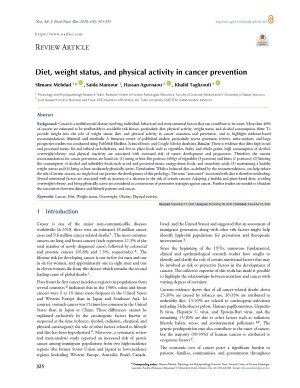
Background: Cancer is a multifactorial disease involving individual, behavioral and environmental factors that can contribute to its onset. More than 40% of cancers are estimated to be attributable to avoidable risk factors, particularly diet, physical activity, weight status, and alcohol consumption. Aim: To provide insight into the role of weight status, diet, and physical activity in cancer causation and prevention, and to highlight evidence-based recommendations. Material and methods: A literature review of published studies, particularly recent systematic reviews, meta-analyses, and large prospective studies was conducted using PubMed/Medline, ScienceDirect, and Google Scholar databases. Results: There is evidence that diets high in red and processed meats, fat and refined carbohydrates, and low in plant foods such as vegetables, fruits, and whole grains, high consumption of alcohol, overweight/obesity, and physical inactivity are associated with increased risk of tumor development and progression. Therefore, the current recommendations for cancer prevention are based on: (1) eating at least five portions (400g) of vegetables (3 portions) and fruits (2 portions); (2) limiting the consumption of alcohol and unhealthy foods such as red and processed meats, energy-dense foods, and trans-fatty acids; (3) maintaining a healthy weight status; and (4) being at least moderately physically active. Conclusion: While a balanced diet, as defined by the recommendations, can help reduce the risk of certain cancers, no single food can prevent the development of this pathology. The term "anticancer" associated with diet is therefore misleading. Several nutritional factors are associated with an increase or a decrease in the risk of certain cancers. Adopting a healthy and plant-based diets, avoiding overweight/obesity, and being physically active are considered as cornerstones of preventive strategies against cancer. Further studies are needed to elucidate the associations between dietary and lifestyle patterns and cancer.
Keywords
How to Cite
Similar Articles
- Breastfeeding knowledge, attitude, and practices among mothers at EPI centers in the Northern part of Dhaka city
- Relationship between cultural food taboos and maternal and child nutrition: A systematic literature review
- Bioactive compounds and antimicrobial activity of extracts from fermented African locust bean (Parkia biglobosa) against pathogenic microorganisms
- Ziziphus lotus (L.) Lam. plant treatment by ultrasounds and microwaves to improve antioxidants yield and quality: An overview
- Visualization of nutrient-related clinical practice guidelines in childhood
- Differences in dietary intake between Turkish vegans and omnivores: a cross-sectional study
- Impact of deep-fat frying cycles on the physicochemical characteristics of two edible vegetable oils marketed in Algeria
- Exploring the interplay between social media addiction, mindful eating, intuitive eating, orthorexia nervosa, and mental health in young adults
- Nutritional Quality Assessment and Dietary Diversity of Food in Collective Catering: A Study in Al Hoceima Province, Morocco
- Enhancing Freshwater Fish Consumption in Algeria: A Study on the Nutritional and Sensory Attributes of Common Carp Sticks
You may also start an advanced similarity search for this article.
Most read articles by the same author(s)
- Acceptance of salt reduction in bakery bread among Moroccan consumers
- Hypertension in Moroccan adults: sociodemographic, lifestyle, and dietary risk factors
- Association of socioeconomic status, dietary behavior and obesity among Moroccan adults of the region of Rabat: A case-control study
- Calcium status in Moroccan children and adolescents assessed by 24-hour urinary excretion
- Nutritional Status, Muscle Mass, and Body Fat Percentage in Patients with Breast Cancer Undergoing Adjuvant Chemotherapy

 NAJFNR is licensed under