COVID-19 and vitamin D supplementation: Is there any evidence based to reduce the risk?
Copyright © 2020 Authors

This work is licensed under a Creative Commons Attribution 4.0 International License.
- Attribution — You must give appropriate credit, provide a link to the license, and indicate if changes were made.
- No additional restrictions — You may not apply legal terms or technological measures that legally restrict others from doing anything the license permits.





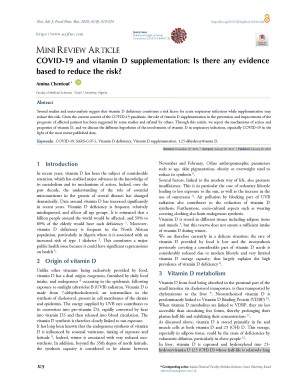
Several studies and meta-analysis suggest that vitamin D deficiency constitutes a risk factor for acute respiratory infections while supplementation may reduce this risk. Given the current context of the COVID-19 pandemic, the role of vitamin D supplementation in the prevention and improvement of the prognosis of affected patients has been suggested by some studies and refuted by others. Through this article, we report the mechanisms of action and properties of vitamin D, and we discuss the different hypotheses of the involvement of vitamin D in respiratory infections, especially Covid-19 in the light of the most recent published data.
Keywords
How to Cite
Similar Articles
- An overview on the incorporation of novel ingredients on nutritional, textural, and organoleptic properties of gluten-free cereal products
- A review of traditional grain-based complementary foods for children aged 6-23 months in selected African countries
- Effect of a millet-based fortified complementary food on the anthropometric and biochemical indices of anemic infants (6-24 months) - ARTICLE RETRACTED
- Microwave-assisted extraction optimization and conventional extraction of phenolic compounds from coriander leaves: UHPLC characterization and antioxidant activity
- Study of the relationship between nutrition, physical activity and overweight/obesity in children in a school context: Study of the relationship between nutrition, physical activity
- Effect of concentration of Allium cepa and Pimpinella anisum powders on the oxidative stability of oils extracted from peanuts cakes
- Abstract Book: Séminaire International des Sciences Alimentaires 2018 (SISA 2018)
- Impact of deep-fat frying cycles on the physicochemical characteristics of two edible vegetable oils marketed in Algeria
- Association between meal skipping and the double burden of malnutrition among university students
- Consumption patterns of sugar-sweetened beverages among tertiary institution students in Abeokuta, Nigeria and their association with the risk of developing type 2 diabetes using FINDRISC
You may also start an advanced similarity search for this article.

 NAJFNR is licensed under